
Most software problems do not start in code. They start earlier – with unclear requirements, weak prioritization, or handoffs that leave too much open to interpretation. That is why the software development life cycle matters. It gives product, engineering, and business teams a shared structure for turning an idea into a working system without losing control of scope, quality, or timing.
For decision-makers, the value is practical. A defined life cycle improves planning, exposes risk sooner, and makes delivery easier to measure. It also creates better conditions for engineering teams. Instead of reacting to shifting expectations, they can work within a process that supports architecture decisions, testing discipline, and release predictability.
What the software development life cycle actually does
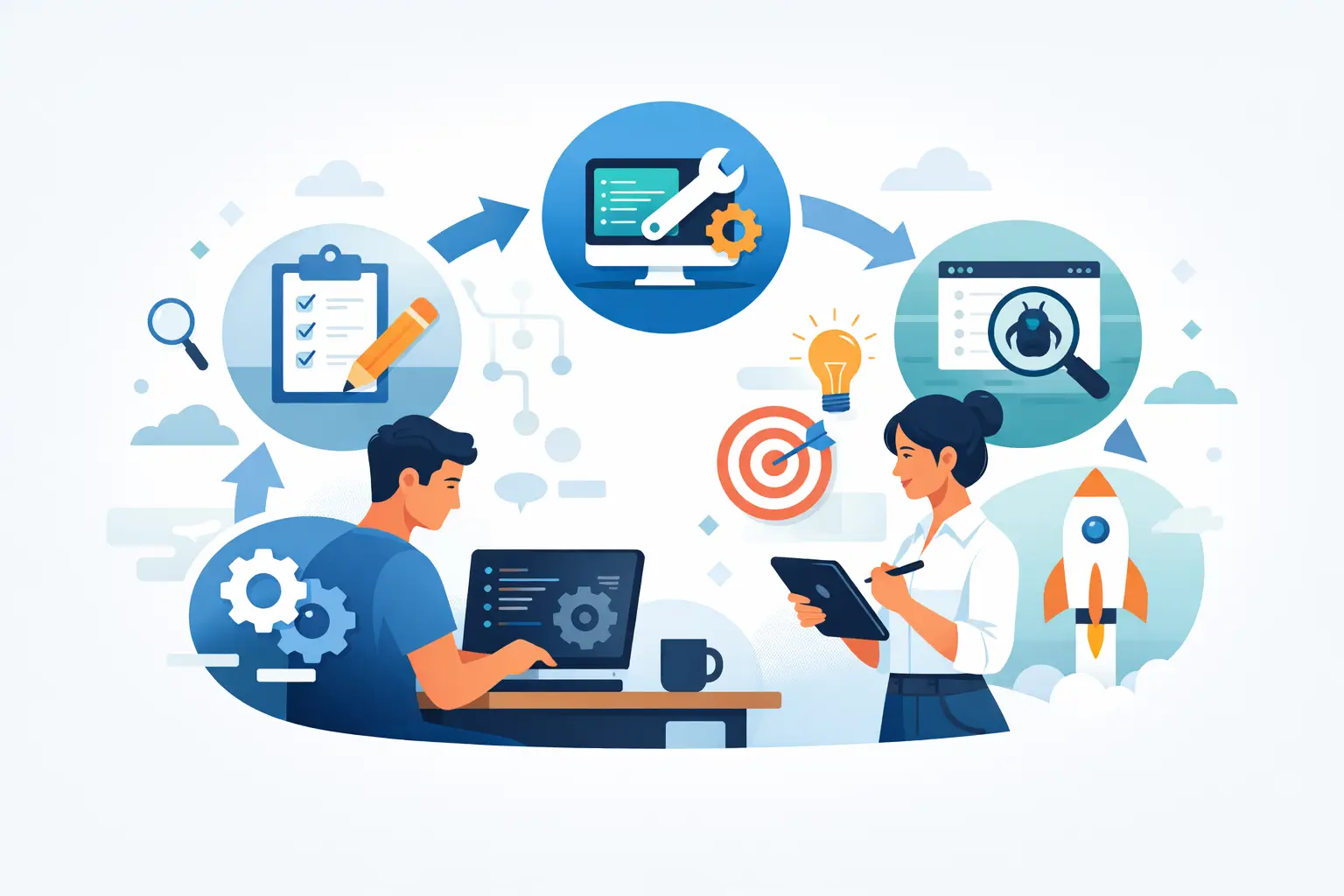
At its core, the software development life cycle is a framework for building software in phases. Those phases usually include planning, requirements, design, development, testing, deployment, and ongoing maintenance. Different teams label them differently, but the purpose stays the same: reduce uncertainty while moving from concept to production.
That matters because software is not only a build problem. It is also a coordination problem. Product stakeholders care about priorities and outcomes. Engineers care about system design, dependencies, and technical constraints. Operations teams care about reliability, performance, and change control. The life cycle creates a shared path across those concerns.
Without that structure, teams often move fast at the start and slow down later. Requirements drift. Technical debt compounds. Testing becomes a bottleneck. Releases turn risky. A good life cycle does not eliminate those issues, but it makes them visible sooner, when they are cheaper to fix.
The core phases of the software development life cycle
The first phase is usually planning. This is where teams define the problem, business case, timeline, budget, and success criteria. For a startup, that might mean validating an MVP scope against runway. For a larger company, it may involve aligning a new platform initiative with compliance, integration, and internal resourcing.
Requirements come next. This phase is often underestimated, but it shapes everything that follows. Good requirements are specific enough to guide engineering and flexible enough to support iteration. They should define what the system must do, which users it serves, and which constraints matter most. If this work is vague, teams pay for it later in rework.
Design translates requirements into a technical plan. That includes application architecture, data models, infrastructure choices, API design, security considerations, and UI behavior where relevant. This is where trade-offs become real. A fast path to market may favor simpler architecture. A platform expected to scale across business units may justify more upfront design rigor.
Development is where the product is built, but even here, process matters more than volume of output. Strong teams break work into manageable increments, review code consistently, and keep implementation aligned with the agreed design. Progress should be measurable. If stakeholders only see movement near the end, the process is too opaque.
Testing validates that the system behaves as expected. That includes functional testing, integration testing, performance checks, and security review where applicable. In mature teams, testing is not a final gate applied after development. It is embedded throughout the cycle, with automated coverage supporting faster and safer change.
Deployment moves the software into production. In some environments, releases happen continuously. In others, they follow stricter approval and rollout procedures. Neither approach is automatically better. It depends on the product, the user impact of failure, and the operational maturity of the team.
Maintenance follows release, and it is not a minor phase. Real software evolves. Users behave in unexpected ways. Dependencies change. New business needs emerge. Teams that treat maintenance as an afterthought usually end up with unstable systems and rising delivery costs.
Common SDLC models and when they fit
The software development life cycle is not one rigid method. It is a broad concept that supports different delivery models.
The waterfall model is linear. One phase is largely completed before the next begins. It works best when requirements are stable, approvals are formal, and change is expensive. That can suit regulated environments or projects with fixed contractual boundaries. The downside is obvious: if early assumptions are wrong, correction comes late and costs more.
Agile models are iterative. Teams work in shorter cycles, deliver smaller increments, and adjust based on feedback. This approach fits product development well, especially when user needs evolve or market timing matters. But agile is not a shortcut around discipline. If backlog management is weak or technical standards are inconsistent, iteration becomes churn.
The spiral model focuses heavily on risk analysis across repeated cycles. It is useful for large, complex efforts where uncertainty is high and the cost of failure is significant. It brings structure to experimentation, though it can feel heavy for smaller teams.
DevOps-oriented delivery extends the life cycle by tightening the connection between development and operations. Automation, observability, and release engineering become central, not secondary. For teams shipping digital products at scale, this is often the difference between frequent releases and frequent outages.
The right model depends on context. A founder building a first product release does not need the same process as an enterprise modernizing a core internal platform. The mistake is not choosing one model over another. The mistake is applying a process that does not match the risk, pace, and complexity of the work.
Where the software development life cycle breaks down
Most failures are not caused by skipping the idea of an SDLC. They happen because the process exists on paper but not in practice.
A common issue is weak discovery. Teams jump from idea to build without enough clarity on user needs, business logic, or integration constraints. Development starts quickly, but momentum is misleading. Ambiguity simply moves downstream.
Another issue is treating design as optional. That does not mean every project needs months of architecture work. It means key decisions should be made deliberately. Data flow, service boundaries, authentication, and deployment assumptions should not emerge by accident in sprint three.
Testing also breaks down when teams rely too heavily on manual validation at the end of a cycle. That creates delays and encourages risk stacking. Smaller, continuous validation usually produces better release confidence than one large test phase under deadline pressure.
Then there is ownership. If no one is clearly accountable for requirements quality, release readiness, or production behavior, the life cycle becomes fragmented. Good delivery depends on named responsibility, not just documented stages.
What decision-makers should look for
If you are evaluating an internal team or an external product engineering partner, the question is not whether they mention the software development life cycle. The question is whether they can run it with clarity.
Look for evidence of structured discovery. That includes concrete scope definition, technical assessment, and early identification of risk. Look for design decisions that connect to business goals, not just engineering preference. Look for development practices that make progress visible and quality measurable.
It is also worth asking how releases are handled. A team that can build features but cannot deploy safely is not operating with a complete delivery model. The same applies after launch. Maintenance, monitoring, and iterative improvement should be planned, not improvised.
Strong teams are also candid about trade-offs. Sometimes speed matters more than architectural elegance. Sometimes long-term maintainability should win, even if it slows the first release. A mature process does not pretend these tensions do not exist. It makes them explicit so leaders can make informed decisions.
For companies scaling digital products or modernizing internal systems, that level of clarity is often the difference between controlled execution and expensive drift. ZierTech’s approach reflects that reality: focused planning, disciplined product engineering, and delivery models built to support real business timelines.
Why this still matters in fast-moving teams
There is a persistent myth that process slows software down. Bad process does. Good process removes hesitation, reduces avoidable rework, and helps teams ship with fewer surprises. The software development life cycle is valuable for the same reason good system design is valuable: it creates order where complexity would otherwise spread.
The point is not to make delivery bureaucratic. It is to make it dependable. Teams should adapt the life cycle to the scale of the product, the maturity of the organization, and the cost of failure. A five-person startup and a mid-market company replacing legacy workflows will not run the same playbook, and they should not.
What they both need is a process that makes assumptions visible, decisions intentional, and outcomes easier to trust. That is usually where better software starts.